Your Email List Is Worth More Than Your Follower Count (Here's How to Actually Use One)

Here's a distinction worth sitting with: your Instagram followers aren't actually yours. They're Instagram's, and you get access to them for as long as the algorithm allows and the platform stays online. Your email list is different — it's a channel nobody else controls, immune to algorithm changes, platform bans, or a sudden policy shift that tanks your reach overnight.
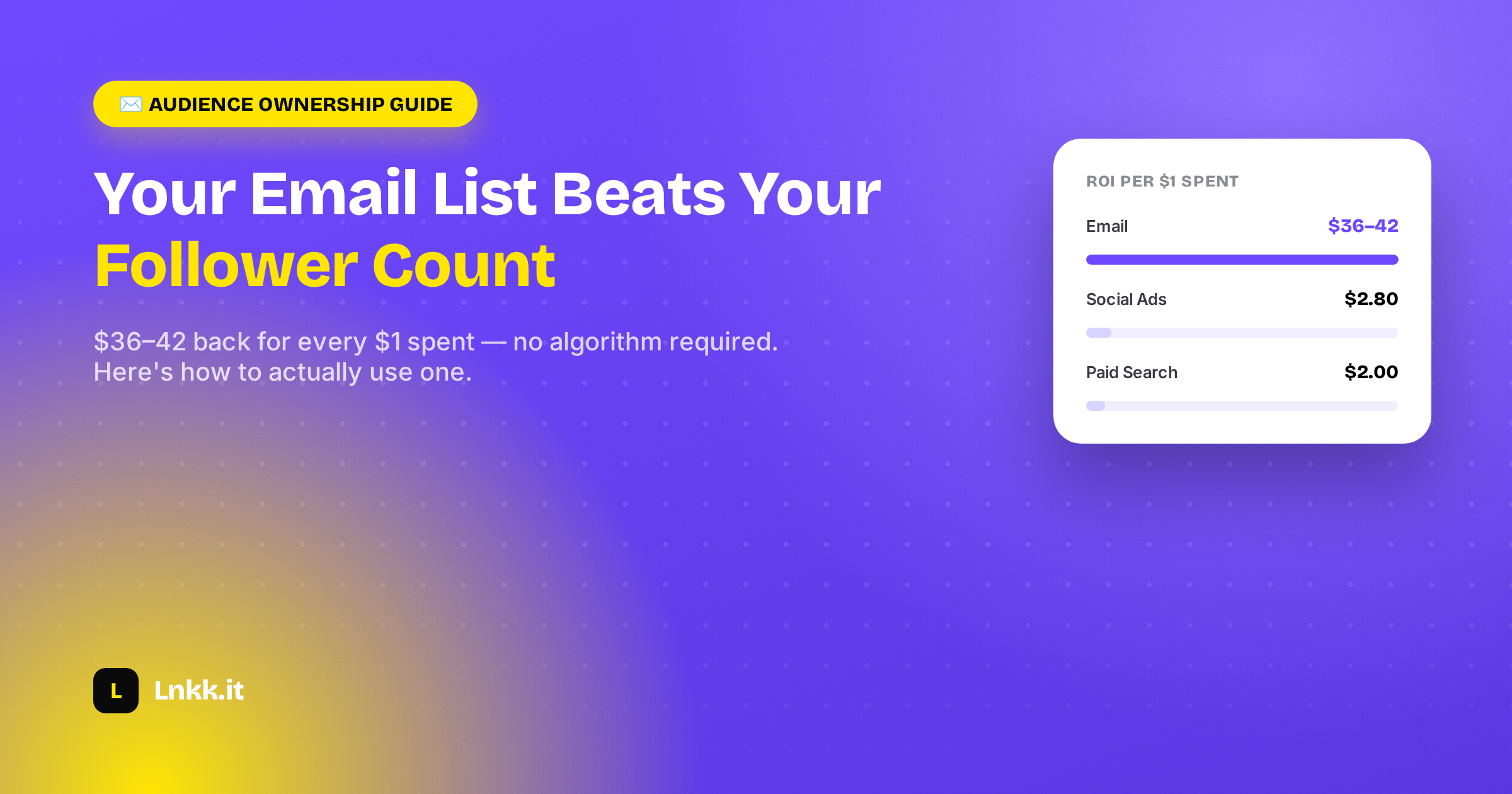
That difference shows up directly in the numbers. Email marketing delivers an average return of $36-42 for every $1 spent in 2026 — compare that to $2.80 for social advertising and $2 for paid search, and it's not close. No other channel combines that kind of reach, ROI, and direct ownership.
Why This Matters More For Creators Specifically
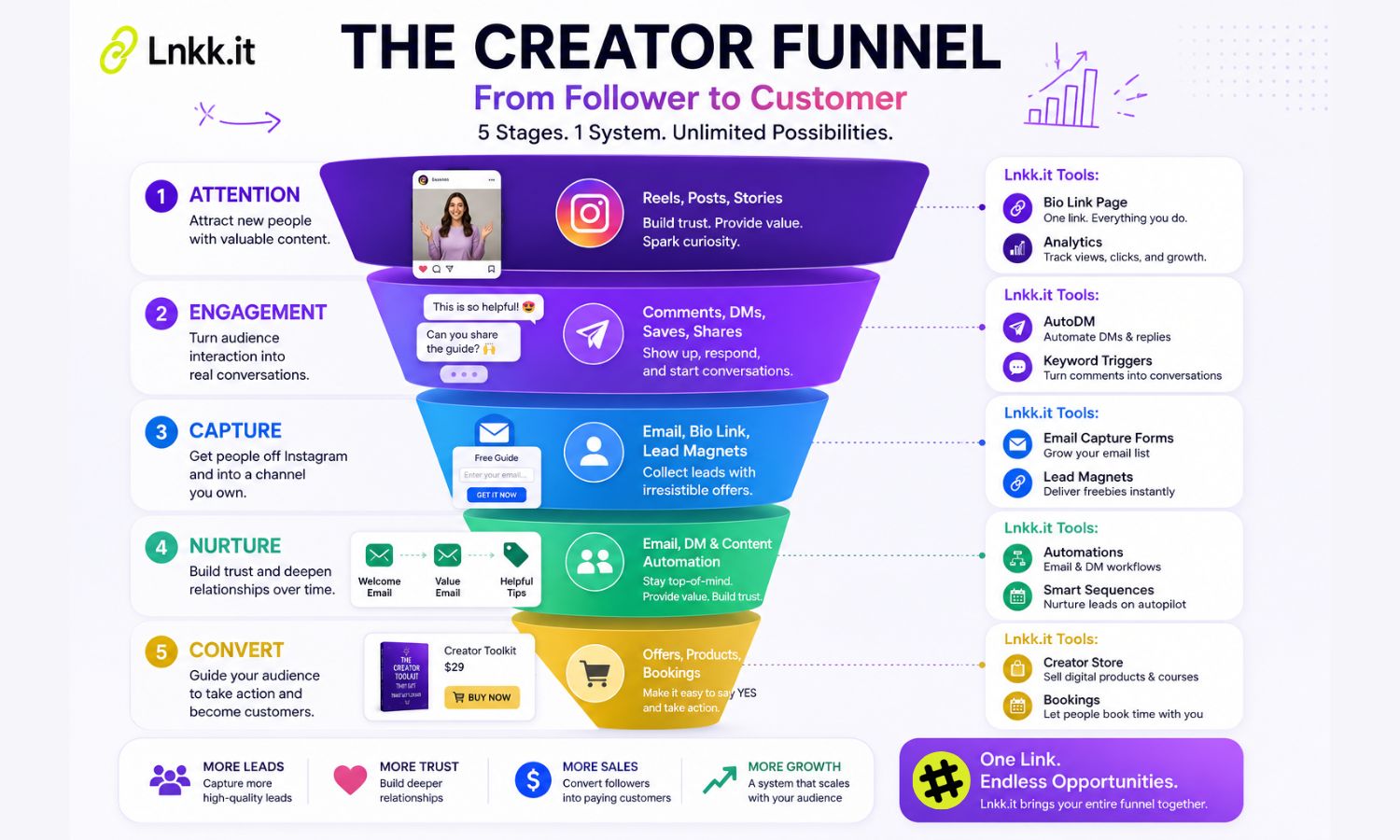
If you've set up Instagram comment-to-DM automation, you're likely already capturing emails without fully using them — a comment triggers a DM, the DM captures an address, and then... often nothing happens with it. That's the gap this guide is meant to close.
An email list is also the one channel a brand can't take away from your media kit pitch, either. Follower counts fluctuate and get questioned; a genuinely engaged email list with real open and click data is a harder asset to dismiss.
Broadcasts vs. Automated Sequences
These are the two core email types, and most creators only ever use one of them:
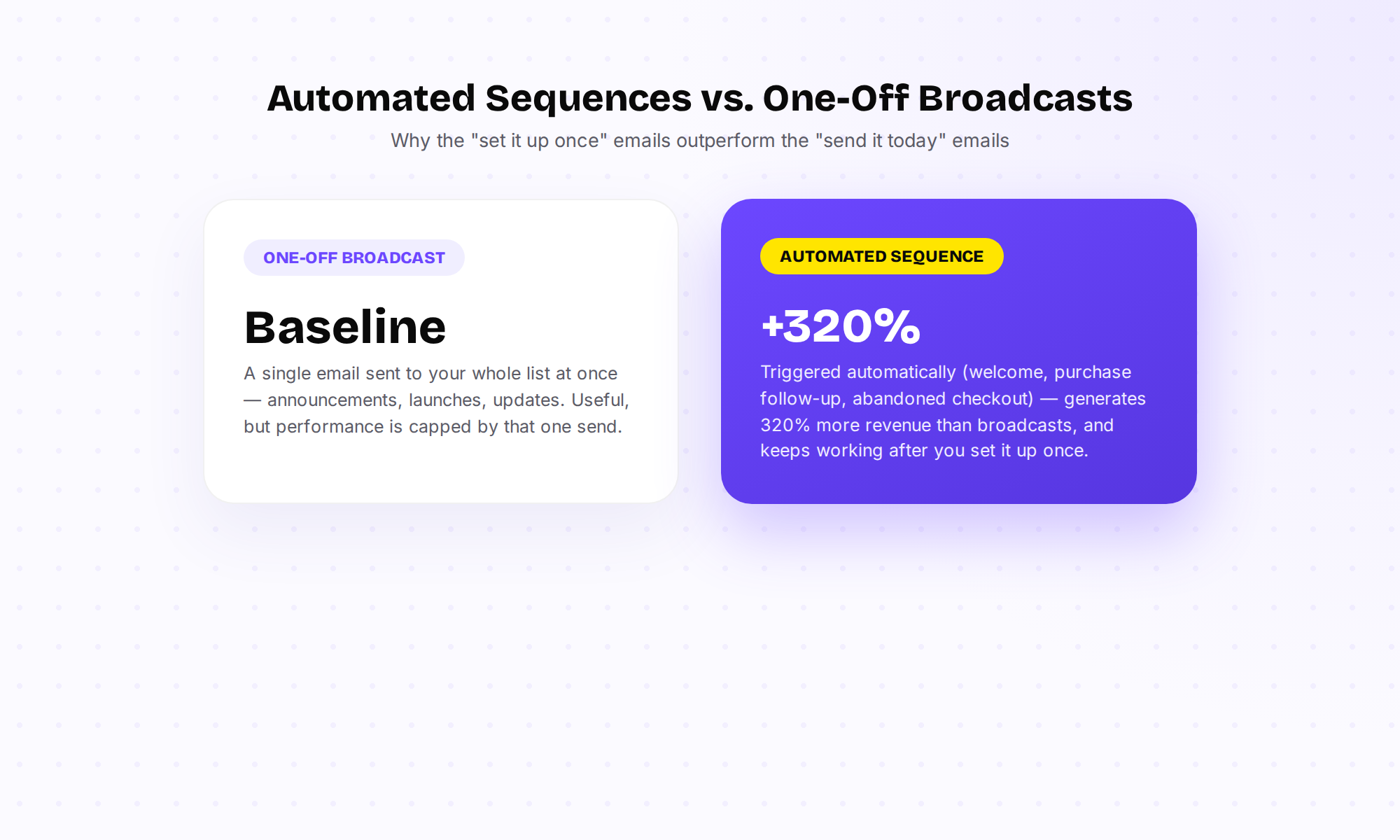
Broadcasts are single sends to your whole list at once — a launch announcement, a newsletter update, a "here's what I'm working on." Useful, but each one only works as hard as that single send.
Automated sequences trigger based on an action — someone joins your list, buys something, abandons a checkout — and then run without you touching them again. The data on this is stark: automated sequences generate 320% more revenue than broadcast emails, and in one widely-cited dataset, sequences generated 41% of total email revenue from just 5.3% of total sends. A small number of well-built automations consistently outperform a much larger volume of one-off emails.
A Basic Welcome Sequence, Broken Down
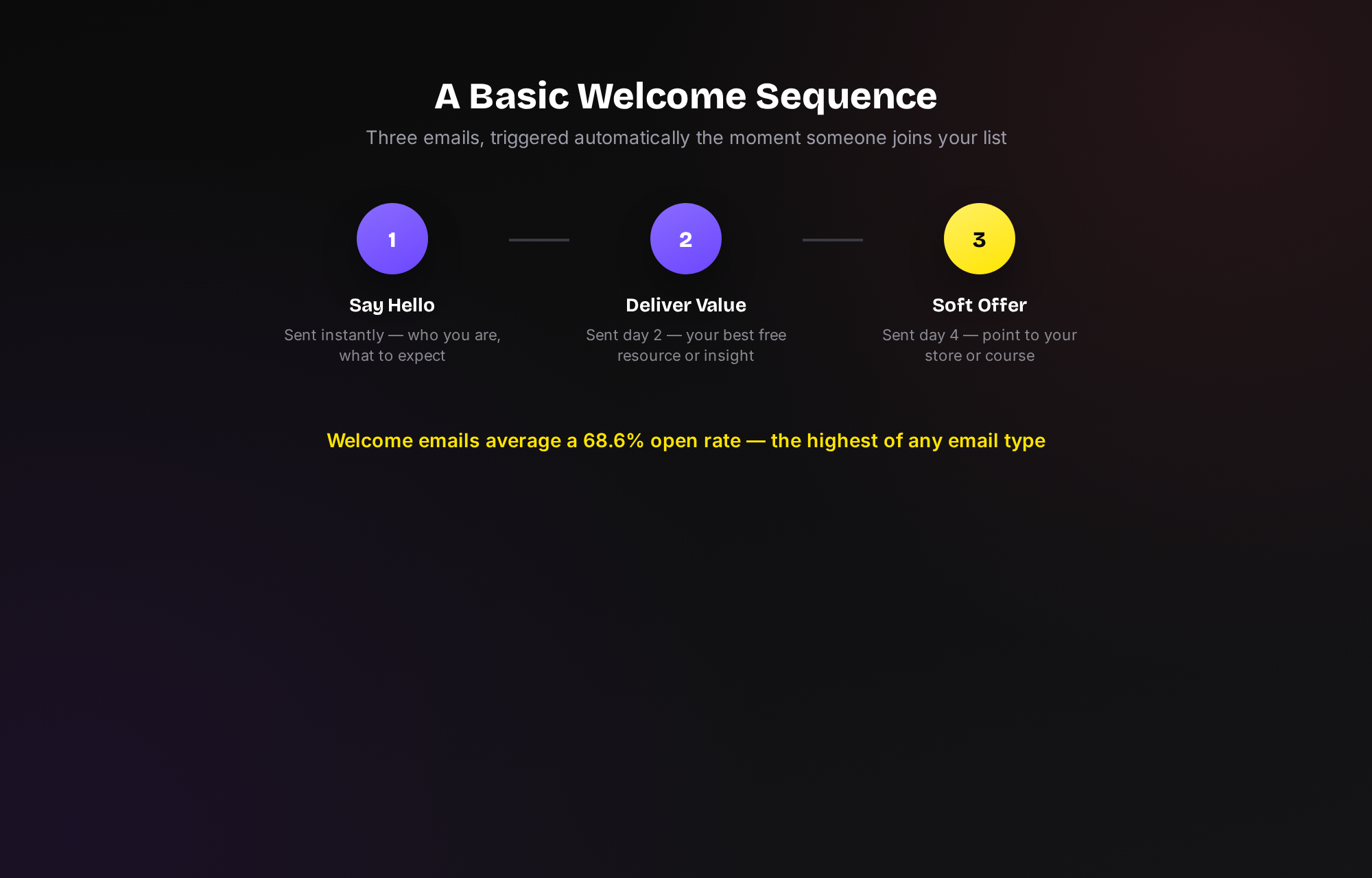
If you build exactly one automation, make it this one — welcome emails average a 68.6% open rate, the highest of any email type, because the person just opted in and is still paying attention.
Say hello — sent immediately. Who you are, what they signed up for, what to expect next. No pitch yet.
Deliver value — sent a day or two later. Your best free resource, insight, or tip — something that makes the signup feel worth it before you ask for anything.
Soft offer — sent a few days after that. Point toward your Creator Store, a course, or whatever you're actually selling — now that there's some trust built.
This three-email structure alone captures most of the value; more sophisticated sequences (abandoned checkout reminders, post-purchase follow-ups) are worth adding later, but the welcome sequence is the one with no reason to skip.
Setting This Up
Lnkk.it's email marketing tool includes a drag-and-drop editor for building both broadcasts and sequences, without needing design or coding skill. To get a welcome sequence running:
Build your 3-email sequence using the drag-and-drop editor
Set the trigger to "new subscriber" so it fires automatically
Space the emails a day or two apart rather than sending all three at once
Connect your capture points — Instagram automation, your bio page forms, or a lead magnet — so new subscribers actually flow into the sequence
Common Mistakes Worth Avoiding
Building a list and never emailing it. A silent list decays — deliverability actually gets worse the longer subscribers go without hearing from you, since inactive addresses drag down engagement metrics that inbox providers use to judge whether your email is spam.
Sending only broadcasts, no automation. Given automated sequences outperform broadcasts by 320%, an email strategy with zero automation is leaving the highest-return part of the channel completely untouched.
No segmentation. Treating a customer who already bought the same as someone who just joined the list means missing obvious, low-effort personalization that meaningfully lifts results — personalized emails see roughly 6x more sales than generic ones.
Too many emails, or too few. Both extremes hurt — bombarding a list drives unsubscribes, while emailing rarely means being forgotten. There's no universal right frequency, but consistency matters more than volume.
FAQ
How is email different from Instagram DMs for the same purpose? DMs are still owned by the platform — Instagram can restrict messaging features or change API access at any time. Email addresses, once collected, are yours regardless of what any platform does.
Do I need a huge list before automation is worth setting up? No — a welcome sequence works the same whether 10 or 10,000 people join this month; it's set up once and runs on autopilot regardless of list size.
What's a reasonable email frequency for a creator list? There's no universal number, but industry data suggests 5-8 emails per month tends to perform best for consumer-facing lists — enough to stay present without becoming the reason someone unsubscribes.
Should I combine broadcasts and sequences, or pick one? Both — sequences handle the automatic, always-on relationship-building; broadcasts handle timely announcements and launches. They serve different jobs.
Ready to turn your email list into an actual channel instead of a static file? Set up your first sequence — the welcome sequence alone is worth building this week.
Capturing emails from Instagram already? Read how comment-to-DM automation works to make sure that pipeline is actually feeding your list.
YOU MAY ALSO LIKE
Why Your Instagram Bio Link Isn't Converting (The In-App Browser Problem)
Your Instagram or TikTok bio link may be losing up to 70% of clicks to the in-app browser problem. Learn why it happens and how smart app-opening links fix it.
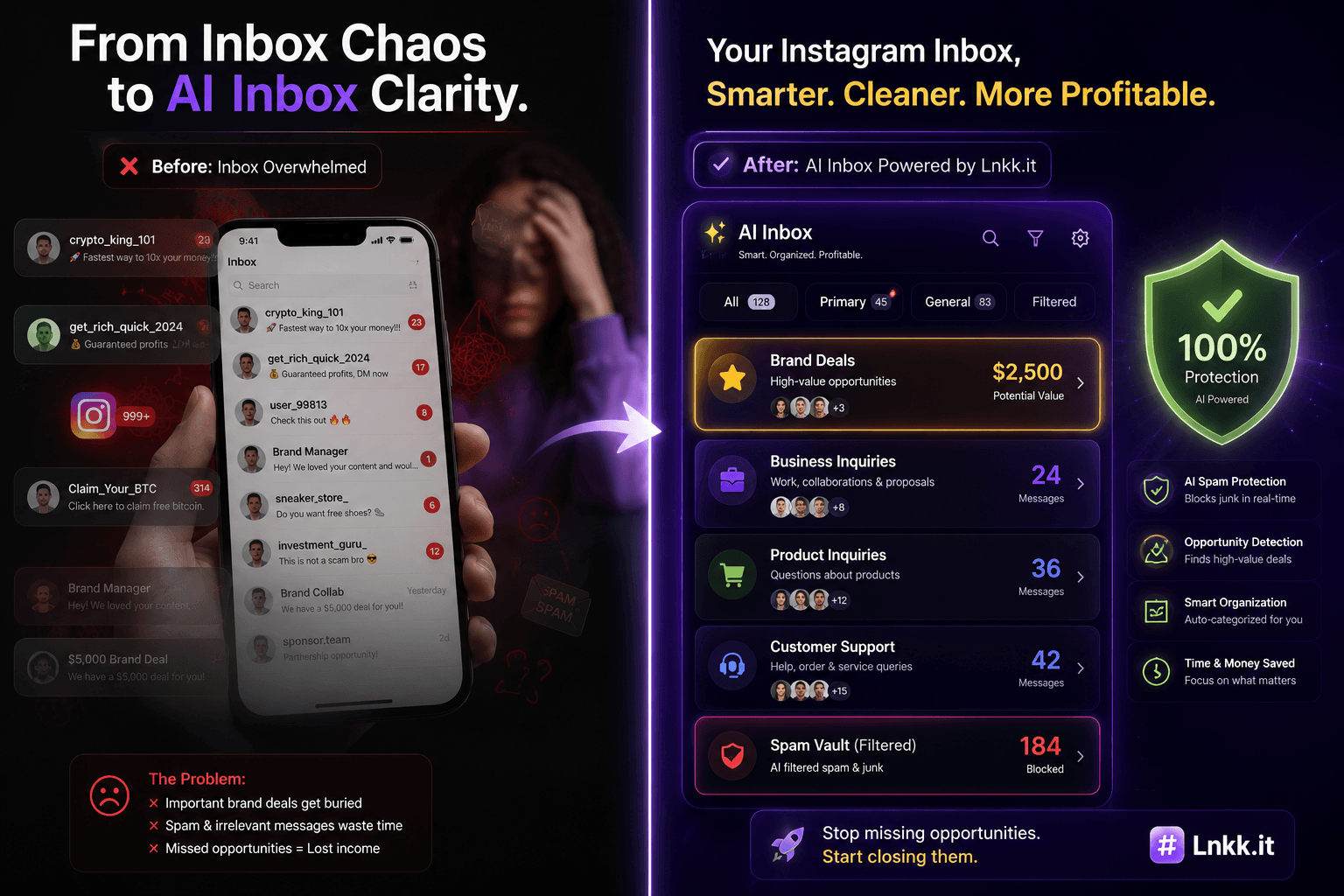
The $10,000 DM Ghost: How AI Inbox Saves Lost Brand Deals
Stop letting $2,000+ brand collaboration offers get buried under 500 spam DMs. Discover how AI-powered Instagram DM classification auto-detects deals, filters out junk, and turns your inbox into a 6-figure commercial engine.